The Dirtbag Billionaire and the Purpose Trust
Current Events and Philanthropy / New Works in the Field / Nonprofit legal history / Philanthropy in the News

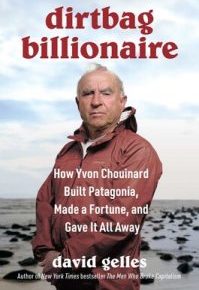
The Dirtbag Billionaire and the Purpose Trust

Editors’ Note: Dana Brakman Reiser reviews David Gelles’s Dirtbag Billionaire: How Yvon Chouinard Built Patagonia, Made a Fortune, and Gave It All Away (Simon & Schuster, 2025). In debates and conversations about corporate social responsibility and social enterprise, few players enjoy the reverence accorded to Patagonia and its founder, Yvon Chouinard. Journalist David Gelles’ new … Continue reading

Union Exemption: Connecting Labor and Nonprofit History
New Works in the Field / Nonprofit legal history / Nonprofits and Historical Research

Union Exemption: Connecting Labor and Nonprofit History

Editors’ Note: John Miles Branch discusses his article on the history of debates regarding the union exemption for nonprofits, recently published in Modern American History. “They want to change the world. They would also like a raise,” announced a New York Times headline in April 2023. Unions organizing nonprofit workers, like the Office and Professional … Continue reading

The Muslim Social: Neoliberalism, Charity, and Poverty in Turkey
New Works in the Field

The Muslim Social: Neoliberalism, Charity, and Poverty in Turkey

Editors’ Note: Gizem Zencirci introduces her book, The Muslim Social: Neoliberalism, Charity, and Poverty (Syracuse, 2024), which recently received the 2025 Outstanding Book Prize from ARNOVA (Association for Research on Nonprofit Organizations and Voluntary Action). Since coming to power in early 2000s, Turkey’s governing party, the Islamic-conservative AKP (Adalet ve Kalkınma Partisi, Justice and Development … Continue reading

From Chocolate to ChatGPT: What Hershey’s Century-Old Philanthropy Reveals About OpenAI’s New $130 Billion Foundation
Current Events and Philanthropy / Philanthropy / Philanthropy in the News

From Chocolate to ChatGPT: What Hershey’s Century-Old Philanthropy Reveals About OpenAI’s New $130 Billion Foundation

Editors’ Note: Peter Kurie discusses the parallels between two American nonprofits that control major for-profit corporations: the OpenAI Foundation, on paper now the wealthiest charitable organization in the U.S., and the Hershey Trust, the subject of his 2018 book, In Chocolate We Trust. (This post has been revised to reflect greater clarity on the organizational … Continue reading

Could a Garland Fund 2.0 Upend America Today?
Radical Fund Book Forum

Could a Garland Fund 2.0 Upend America Today?

Editors’ Note: David Pozen continues HistPhil’s book forum on John Witt’s The Radical Fund: How a Band of Visionaries and a Million Dollars Upended America (Simon & Schuster, 2025). A version of this post originally appeared on the Balkinization blog, which is conducting a forum on Witt’s book as well, with some outstanding contributions by … Continue reading

What is Civil Society, and why should we care?: Farrell on Gellner on the conditions of liberty
Shrinking Space for Global Civil Society

What is Civil Society, and why should we care?: Farrell on Gellner on the conditions of liberty

Editors’ Note: This post from Henry Farrell originally appeared on his Substack, Programmable Mutter. There are many possible stories about why American political conservatism is such an intellectual trainwreck. Here’s one. Conservatives used at least nominally to argue that it was important to protect civil society from the depredations of government, and many genuinely believed … Continue reading

When the Tax Code (and Private Foundations) Nudged Americans Toward Nonviolence
Radical Fund Book Forum

When the Tax Code (and Private Foundations) Nudged Americans Toward Nonviolence

Editors’ Note: This post, from John Witt, inaugurates HistPhil’s book forum on Witt’s recently published The Radical Fund: How a Band of Visionaries and a Million Dollars Upended America (Simon & Schuster, 2025), which chronicles the influence of the American Fund for Public Service, established in 1922. As Witt argues, the Garland Fund, as it … Continue reading

Resisting the Hierarchy of Evidence: Philanthropic Foundations and the Rise of RCTs
New Works in the Field

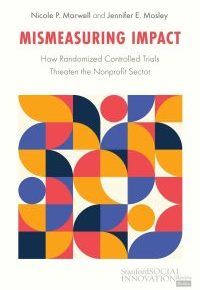
Resisting the Hierarchy of Evidence: Philanthropic Foundations and the Rise of RCTs

Editors’ Note: Nicole P. Marwell and Jennifer E. Mosley discuss their new book, Mismeasuring Impact: How Randomized Controlled Trials Threaten the Nonprofit Sector (Stanford University Press, 2025). Recent scholarship has offered varying interpretations of what the appropriate function of foundations should be within a democracy. One dominant perspective highlights foundations’ contributions as drivers of social … Continue reading

NGO Attacks Gone Wild and the Stirrings of MAGA Voluntarism
Current Events and Philanthropy

NGO Attacks Gone Wild and the Stirrings of MAGA Voluntarism

Editors’ Note: HistPhil co-editor Benjamin Soskis reflects on two Congressional hearings held this summer scrutinizing federal funding of nonprofits and on the ways they helped to delineate right-wing antagonism to the nonprofit sector. I knew it wouldn’t exactly be a University of Chicago faculty seminar. The cheeky title of the hearing on the federal funding … Continue reading

Taking the Long View: Gauging the Impact of Residential Fellowships in Art History over the Decades
Uncategorized

Taking the Long View: Gauging the Impact of Residential Fellowships in Art History over the Decades

Editors’ Note: Nancy Um and Matthew Westerby introduce findings from the Scholars Data Project, hosted by the Association of Research Institutes in Art History, on residential fellowships sponsored by four leading research institutions in art history over the last six decades. Each summer, humanities scholars in the United States (and beyond) eagerly await the opening … Continue reading

The Adoption Plan: The Politics of Aid in Modern China
New Works in the Field

The Adoption Plan: The Politics of Aid in Modern China

Editors’ Note: Jack Neubauer discusses his new book, The Adoption Plan: China and the Remaking of Global Humanitarianism, its reframing of the politics of humanitarian aid from the perspective of aid’s recipients, and what lessons that might hold for contemporary humanitarianism. Since the dismantling of USAID in early 2025, there has been an outpouring of … Continue reading

Assessing the political purpose doctrine and the perennial problem of charities and politics
New Works in the Field / Nonprofit legal history

Assessing the political purpose doctrine and the perennial problem of charities and politics

Editors’ Note: Jane Calderwood Norton and Matthew Harding offer an assessment of the “political purpose doctrine,” which excludes organizations whose main purpose is political from charitable status, and examine how jurisdictions across the common law world have responded to it, based on their recent article in Legal Studies, “Charities and Politics: Where Did We Go … Continue reading

Civil Society Under Threat in India and the U.S. What Can We Learn From Each Other?
Shrinking Space for Global Civil Society

Civil Society Under Threat in India and the U.S. What Can We Learn From Each Other?

Editors’ Note: Ingrid Srinath asks what can the world’s oldest democracy and the world’s most populous democracy learn from each other about the shrinking civic space each is experiencing. On March 10, 2025, CIVICUS – the global civil society alliance I once led – added the U.S. to its Civic Monitor Watchlist of countries where … Continue reading

Revisiting Henry Hansmann: Higher Ed Endowments, Financial Buffers, and Three Threats to Institutional Autonomy
Current Events and Philanthropy / Nonprofit legal history / Philanthropy and Education

Revisiting Henry Hansmann: Higher Ed Endowments, Financial Buffers, and Three Threats to Institutional Autonomy

Editors’ Note: Allison Tait revisits Henry Hansmann’s 1990 law review article, Why Do Universities Have Endowments?, at a moment when university endowments face unprecedented threats, elevating Hansmann’s question about their fundamental purpose. Endowments, currently under attack and facing proposals that increase the tax on them in some higher education institutions from 1.4% to 21%, have … Continue reading

From Philanthropoid to Foundation Professional: Reflecting on a Century of Staff Role Development in U.S. Private Foundations
New Works in the Field / Philanthropy

From Philanthropoid to Foundation Professional: Reflecting on a Century of Staff Role Development in U.S. Private Foundations

Editors’ Note: Michele Fugiel Gartner offers an outline of the history of foundation staff role development, adapted from an article, co-written with Tobias Jung and Alina Baluch, published in The Foundation Review (2023). In today’s polarized political landscape, philanthropy is under increasing scrutiny, from calls for greater transparency to more profound challenges about legitimacy and … Continue reading

The Slow Violence of Financial Counter-terrorism: A Quarter of Century of Muslim-led charities under the “Financial War on Terror”
Current Events and Philanthropy / Philanthropy and the State / Shrinking Space for Global Civil Society

The Slow Violence of Financial Counter-terrorism: A Quarter of Century of Muslim-led charities under the “Financial War on Terror”

Editors’ Note: Samantha May discusses the “undocumented and unseen violence” that can be brought on by the regulation of Muslim charities as part of the “Financial War on Terror,” based on her 2021 book, Islamic Charity: How Charity Became Seen as a Threat to National Security (Bloombsury 2021). The year 2026 will mark a quarter of … Continue reading

Carnegie Cultural Philanthropy and the Museum Movement
Archives and Knowledge Management / New Works in the Field

Carnegie Cultural Philanthropy and the Museum Movement

Editors’ Note: Ian McShane introduces his new book, The Museum Movement: Carnegie Cultural Philanthropy and Museum Development in the Anglosphere, 1920-1940 (Routledge, 2024). The focus of Andrew Carnegie, and the foundation he established, on public libraries as agencies of personal development and civic uplift is well known. The Carnegie Corporation of New York (CCNY), though, … Continue reading

A Republican Journey: From de Tocqueville to Coercive Voluntarism
Current Events and Philanthropy / Oral History/Testimonies

A Republican Journey: From de Tocqueville to Coercive Voluntarism

Editors’ Note: Reflecting on the novel challenge the Trump administration now poses to civil society, David Morse reflects on the distance traveled from a White House gathering in 2003, one which defined the embrace of voluntarism by Trump’s last Republican predecessor, George W. Bush. Donald Trump’s war on the independence of the independent sector, combined … Continue reading

“A Very Complicated Entity”: Lessons from the DOGE-United States Institute of Peace Showdown
Nonprofit legal history

“A Very Complicated Entity”: Lessons from the DOGE-United States Institute of Peace Showdown

Editors’ Note: Ellen Aprill explains why the hybrid nature of the United States Institute of Peace (USIP), both a government and nonprofit entity, was at the heart of the standoff between Department of Government Efficiency (DOGE) and USIP officials earlier this week. The United States Institute of Peace (USIP) is the latest target of President … Continue reading

The New Populist Conservatism and Civil Society
History of Philanthropy and Conservatism / Philanthropy in the News

The New Populist Conservatism and Civil Society

Editors’ Note: In the first of a two-part series, Michael E. Hartmann and William A. Schambra reflect on the populist New Right’s conception and relation to civil society. Generally, Republican presidents at least since Richard Nixon have positively characterized civil society and its role in American life. Recall, for example, some of the old standbys: … Continue reading