Editors’ Note: Reflecting on her new book, co-authored with Jeffrey Henig and Rebecca Jacobsen, Outside Money in School Board Elections: The Nationalization of Education Politics, Sarah Reckhow draws our attention to Los Angeles and details a new trend among mega donors in coordinating their philanthropic giving and political contributions. Reckhow argues that this behavioral shift … Continue reading
Author Archives: HistPhil
7 Ways to Read around the History of Philanthropy’s Diversity Problem this Black History Month
Editors’ Note: Against the backdrop of Black History Month, Tyrone McKinley Freeman asks fellow historians of philanthropy to acknowledge black Americans’ history as philanthropists, reminding us that the current literature on the history of US philanthropy “does not fully capture the richness of African Americans’ giving, volunteering, associating, and advocating systems, models, behaviors and ways … Continue reading
Networked Social Movements and the ‘Tyranny of Structurelessness’
Editors’ Note: Rhodri Davies reflects on the contemporary relevance of Jo Freeman’s 1970 essay, “The Tyranny of Structurelessness.” The recent success of digitally-coordinated protest movements like Black Lives Matter and #MeToo has sparked a wave of interest in the potential for technology to transform the ways in which we organise. In particular, it has placed … Continue reading
Effective Altruism, Meet Animal Protection
Editors’ Note: Examining how the animal protection and effective altruism movements have come to intersect, Garrett M. Broad explains the ways that these communities have contributed to each other, what conflicts have emerged, and what the future holds for ‘effective animal advocacy.” In this essay, Broad draws from an academic article he wrote, published this past December in Agriculture … Continue reading
Aprill on LIBERAL SUPPRESSION: Viewing Section 501(c)(3)’s Speech Restrictions In Their Tax Context
Editors’ Note: Ellen P. Aprill reviews Philip Hamburger’s Liberal Suppression: Section 501(c)(3) and the Taxation of Speech. Hamburger introduced his book’s central arguments in a previous HistPhil post and replies to Aprill’s review in the comments below. Philip Hamburger’s Liberal Suppression: Section 501(c)(3) and the Taxation of Speech opposes on constitutional grounds the limitation on lobbying and … Continue reading
Hamburger on LIBERAL SUPPRESSION: How Section 501(c)(3)’s Speech Restrictions Undermine Constitutional Rights
Editors’ Note: Philip Hamburger introduces some central arguments of his recently published book, Liberal Suppression: Section 501(c)(3) and the Taxation of Speech. Ellen Aprill will follow later this week with a review of the book. Last spring I published a book on a revenue subsection—not something that would ordinarily stir the passions of readers. The subsection in … Continue reading
Rob Reich Responds
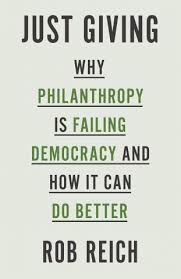
Editors’ Note: HistPhil’s forum on Rob Reich’s Just Giving: Why Philanthropy is Failing Democracy and How it Can Do Better (2018) has included three separate reviews of the book by HistPhil co-editors Stanley N. Katz, Maribel Morey, and Benjamin Soskis. The forum closes with a response to these reviews from the book’s author, Rob Reich. In Just Giving: … Continue reading
Philanthropy, Democratic Scrutiny, and Time: Soskis on Reich’s Just Giving
Editors’ Note: Benjamin Soskis continues HistPhil‘s book forum on Rob Reich’s Just Giving. In the forum’s next post, Reich will response to these reviews. I think it’s fair to say that Rob Reich’s Just Giving is one of the more “time-sensitive” inquiries into philanthropy in recent decades. By this I don’t just mean that it’s especially … Continue reading
Keeping Philanthropy Fully Accountable in a Democracy: Morey on JUST GIVING & WINNERS TAKE ALL
Editors’ Note: Continuing HistPhil‘s forum on Rob Reich‘s Just Giving (2018), HistPhil co-editor Maribel Morey relates Just Giving to another much-discussed book on philanthropy published earlier this year: Anand Giridharadas’ Winners Take All (2018). In Winners Take All: The Elite Charade of Changing the World (2018), journalist Anand Giridharadas introduces readers to a network of elites taking on “social change as … Continue reading
Philanthropy, Democracy, and the Goose that Laid the Golden Egg: Katz on Reich’s Just Giving
Editors’ Note: Today begins HistPhil‘s mini-forum on Rob Reich‘s much anticipated new book, Just Giving: Why Philanthropy is Failing Democracy and How it Can Do Better. The three HistPhil co-editors, Stan, Maribel, and Ben, will each offer their perspectives on Just Giving, followed by a response from Rob. The forum begins with a review from Stanley … Continue reading
Cost Escalation in U.S. Higher Education: Historical Analysis and the Competing Bowen Theories
Editors’ Note: Bruce Kimball casts the light of historical analysis on the two major theories explaining cost escalation in U.S. higher education. His post draws upon the following sources: Bruce A. Kimball and Jeremy B. Luke, “Historical Dimensions of the “Cost Disease” in U.S. Higher Education, 1870s–2010s,” Social Science History 42 (2018): 29-55; Bruce A. Kimball and … Continue reading
Crossing the border between helping and being helped: Informal Giving and the U.S. Immigrant Crisis
Editors’ Note: Jamie Goodwin introduces her research on the informal giving network of immigration communities at the U.S. Southern border. [Haga clic aquí para la versión en español de este artículo.] “Our principal thesis is that a river of care rises…and that we must trace its flow through all its branches, including all those hidden yet … Continue reading
Community Foundations as Advocates
Editors’ Note: David Suárez, Kelly Husted and Andreu Casas complete HistPhil’s preview of a symposium on foundations as interest groups which Kristin A. Goss and Jeffrey M. Berry have co-edited for the October issue of Interest Groups & Advocacy. Below, Suárez, Husted, and Casas summarize their contribution to the forum. Years of gridlock in policymaking at the national level in the U.S. has led to more … Continue reading
Choosing between Financial Viability and a Political Voice: A History of the NAACP’s Tax Status
Editors’ Note: Bringing historical context to the NAACP’s decision in 2017 to change its tax status from a 501(c)3 to 501(c)4, HistPhil co-editor Maribel Morey argues that the NAACP’s announcement “should be understood as yet another move by an organization long deciding between accepting political silence and financial viability as a 501(c)3 or gaining political voice and financial vulnerability as … Continue reading
Giving to Government: Foundation Grants to State Education Agencies
Editors’ Note: In a previous post, Kristin A. Goss and Jeffrey M. Berry introduced the symposium on foundations as interest groups that they have co-edited for the October issue of Interest Groups & Advocacy. Here, Leslie K. Finger discusses her contribution to the symposium. When we think of foundations like the Gates Foundation and the Wallace Foundation, we usually think of … Continue reading
Foundations and Their Interests
Editors’ Note: Kristin A. Goss and Jeffrey M. Berry have co-edited a symposium on the topic of foundations as interest groups for the October issue of Interest Groups & Advocacy. Here, Goss and Berry preview their contributions to the symposium and introduce two other articles from this October issue which HistPhil will be spotlighting in the next days. With the … Continue reading
Keep Nonprofit Studies Weird: History & Humanities at the 2018 ARNOVA Annual Conference in Austin
Editors’ Note: Today, the 47th Annual Association for Research on Nonprofit Organizations and Voluntary Action (ARNOVA) Conference meets in Austin, Texas. The conference planners have made a concerted effort to encourage more panels on humanities-related subjects (last year, they introduced a separate humanities track). HistPhil co-editor Benjamin Soskis will be there, participating on a panel on … Continue reading
Carnegie, Ford, and the Rapid Rise of Behavioral Approaches in the Social Sciences
Editors’ Note: Comparing the strategies of the Ford Foundation and Carnegie Corporation in promoting the behavioral sciences in mid-20th century U.S., Emily Hauptmann concludes the essay by noting that: “though there were important differences between how Carnegie and Ford chose to publicize their aims, both devoted considerable resources to building what they hoped would be congenial, … Continue reading
NGOs and International Development: What have we learned, how did we learn it, and where should NGO research go next?
Editors’ Note: Collecting and analyzing three decades of NGO research, Allison Schnable, Jennifer N. Brass, and Rachel S. Robinson have asked: “what have we learned, and how have we learned it? Where should NGO scholarship go next?” Recently published in World Development, the authors share their findings. The 1980s were dubbed “the NGO decade.” In fact, however, these … Continue reading
Grappling with Legacy – The Pursuit of Effective Philanthropy with Ancestral Skeletons in the Closet
Editors’ Note: Sylvia Brown chronicles her experience grappling with the relationship between the legacy of the Brown Family and her own commitment to philanthropy. In 1989 my father sold his most valuable possession, a Colonial-era bookcase-on-desk, to pay for the restoration of our family home in Providence, Rhode Island. The desk fetched $12.1 million at … Continue reading