Aprill on LIBERAL SUPPRESSION: Viewing Section 501(c)(3)’s Speech Restrictions In Their Tax Context
New Works in the Field

Aprill on LIBERAL SUPPRESSION: Viewing Section 501(c)(3)’s Speech Restrictions In Their Tax Context

Editors’ Note: Ellen P. Aprill reviews Philip Hamburger’s Liberal Suppression: Section 501(c)(3) and the Taxation of Speech. Hamburger introduced his book’s central arguments in a previous HistPhil post and replies to Aprill’s review in the comments below. Philip Hamburger’s Liberal Suppression: Section 501(c)(3) and the Taxation of Speech opposes on constitutional grounds the limitation on lobbying and … Continue reading →

Hamburger on LIBERAL SUPPRESSION: How Section 501(c)(3)’s Speech Restrictions Undermine Constitutional Rights
New Works in the Field

Hamburger on LIBERAL SUPPRESSION: How Section 501(c)(3)’s Speech Restrictions Undermine Constitutional Rights

Editors’ Note: Philip Hamburger introduces some central arguments of his recently published book, Liberal Suppression: Section 501(c)(3) and the Taxation of Speech. Ellen Aprill will follow later this week with a review of the book. Last spring I published a book on a revenue subsection—not something that would ordinarily stir the passions of readers. The subsection in … Continue reading →

Rob Reich Responds
Book Forum on Reich's Just Giving / New Works in the Field

Rob Reich Responds

Editors’ Note: HistPhil’s forum on Rob Reich’s Just Giving: Why Philanthropy is Failing Democracy and How it Can Do Better (2018) has included three separate reviews of the book by HistPhil co-editors Stanley N. Katz, Maribel Morey, and Benjamin Soskis. The forum closes with a response to these reviews from the book’s author, Rob Reich. In Just Giving: … Continue reading →

Crossing the border between helping and being helped: Informal Giving and the U.S. Immigrant Crisis
Current Events and Philanthropy / New Works in the Field

Crossing the border between helping and being helped: Informal Giving and the U.S. Immigrant Crisis

Editors’ Note: Jamie Goodwin introduces her research on the informal giving network of immigration communities at the U.S. Southern border. [Haga clic aquí para la versión en español de este artículo.] “Our principal thesis is that a river of care rises…and that we must trace its flow through all its branches, including all those hidden yet … Continue reading →

Carnegie, Ford, and the Rapid Rise of Behavioral Approaches in the Social Sciences
New Works in the Field

Carnegie, Ford, and the Rapid Rise of Behavioral Approaches in the Social Sciences

Editors’ Note: Comparing the strategies of the Ford Foundation and Carnegie Corporation in promoting the behavioral sciences in mid-20th century U.S., Emily Hauptmann concludes the essay by noting that: “though there were important differences between how Carnegie and Ford chose to publicize their aims, both devoted considerable resources to building what they hoped would be congenial, … Continue reading →

NGOs and International Development: What have we learned, how did we learn it, and where should NGO research go next?
New Works in the Field

NGOs and International Development: What have we learned, how did we learn it, and where should NGO research go next?

Editors’ Note: Collecting and analyzing three decades of NGO research, Allison Schnable, Jennifer N. Brass, and Rachel S. Robinson have asked: “what have we learned, and how have we learned it?  Where should NGO scholarship go next?” Recently published in World Development, the authors share their findings.  The 1980s were dubbed “the NGO decade.”  In fact, however, these … Continue reading →

The enrollment Crisis and Financial Isomorphism in Legal education, 1890-2018
New Works in the Field / Philanthropy and Education

The enrollment Crisis and Financial Isomorphism in Legal education, 1890-2018

Editors’ Note: This post, from Bruce A. Kimball and Daniel R. Coquillette, is adapted from their book, On the Battlefield of Merit: Harvard Law School, the First Century (Harvard University Press, 2015), which was awarded the Peter Dobkin Hall History of Philanthropy Prize by the Association for Research on Nonprofit Organizations and Voluntary Associations in 2017. … Continue reading →

The Changing Meaning of Community Development in Harlem (And its Consequences)
New Works in the Field / Philanthropy and Historical Research / Philanthropy and Inequality

The Changing Meaning of Community Development in Harlem (And its Consequences)

Editors’ Note: Brian D. Goldstein introduces his recent work, The Roots of Urban Renaissance: Gentrification and the Struggle Over Harlem (Harvard, 2017). The January 29, 1977 front page of the New York Amsterdam News offered grim news to any Harlemites hoping to own part of the land they inhabited. “Harlem Commonwealth Council Fails to Sell Shares to Residents,” … Continue reading →

Past Transactions: The History of Fee-Charging in the American Nonprofit Human Services Sector
New Works in the Field

Past Transactions: The History of Fee-Charging in the American Nonprofit Human Services Sector

Editors’ Note: Maoz Brown previews his article, “The Moralization of Commercialization: Uncovering the History of Fee-Charging in the U.S. Nonprofit Human Services Sector,” which was recently published in Nonprofit and Voluntary Sector Quarterly.  Finances are often viewed as vital signs in the nonprofit sector, as in the much-discussed (and much-lamented) case of using administrative expense … Continue reading →

Philanthropy and the End of Teacher Autonomy
New Works in the Field / Philanthropy and Education

Philanthropy and the End of Teacher Autonomy

Editors’ Note: Nicholas Tampio, author of the recently published Common Core: National Education Standards and the Threat to Democracy, discusses the role the Bill and Melinda Gates Foundation played in the establishment of Common Core. I recently gave a talk at a local bookstore about my new book on the Common Core, a set of … Continue reading →

From Turtle Bay to DC: The Transformation of American Human Rights Activism in the Long 1960s
New Works in the Field

From Turtle Bay to DC: The Transformation of American Human Rights Activism in the Long 1960s

Editors’ Note: Sarah B. Snyder discusses her new book, From Selma to Moscow: How Human Rights Activists Transformed U. S. Foreign Policy. Americans and human rights have had a long, interconnected history.  After all, Thomas Jefferson used the language of “rights” in his 1776 Declaration of Independence.  And, Americans were active in shaping human rights commitments … Continue reading →

New Works in the Field

The Kids Are Alright: The Promise and Reality of Youth Volunteering, 1974-2018

Editors’ Note: Robert Grimm and Nathan Dietz discuss the findings of the new report from the University of Maryland’s Do Good Institute, “Good Intentions, Gap in Action,” on youth civic engagement. Over the past several weeks, the students of Marjorie Stoneman Douglas High School in Parkland, Florida have proved that young people have the civic … Continue reading →

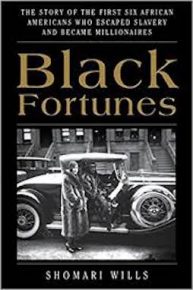
A Review of Shomari Wills’s BLACK FORTUNES (2018)
New Works in the Field / Philanthropy and Historical Research

A Review of Shomari Wills’s BLACK FORTUNES (2018)

Editors’ Note: HistPhil co-editor Maribel Morey reviews Shomari Wills’s Black Fortunes: The Story of the First Six African Americans Who Escaped Slavery and Became Millionaires (New York: Amistad, HarperCollins Publishers, 2018).  Detailing a history of the “first cohort of black millionaires” in the United States, journalist Shomari Wills begins Black Fortunes by correcting the popular myth that … Continue reading →

Risk and Reward: A History of Charitable Gift Annuities
New Works in the Field / Philanthropy and Historical Research

Risk and Reward: A History of Charitable Gift Annuities

Editors’ Note: Ronald A. Brown provides a history of charitable gift annuities, based on his new book, A History of Charitable Gift Planning: How Gift Annuities Shaped American Philanthropy (1830-1959). In the ecosystem of American philanthropy, money is not only given, it is actively raised. There are only a few major histories of charitable fundraising, … Continue reading →

Democracy, Social Science, and Philanthropy in the Mid-Century United States
New Works in the Field / Philanthropy and Democracy

Democracy, Social Science, and Philanthropy in the Mid-Century United States

Editors’ Note:  Previewing his new book Democracy in Exile: Hans Speier and the Rise of the Defense Intellectual (Ithaca, NY: Cornell University Press, 2018), Daniel Bessner places particular attention on the work’s engagement with philanthropic history.  In the last several decades, the history of the social sciences and philanthropy has experienced something of a renaissance. Books and articles by … Continue reading →

The Historical Roots of Humanitarian Photography: a 19th-Century Evangelical Newspaper’s Enduring Influence on the Global Aid Industry
New Works in the Field

The Historical Roots of Humanitarian Photography: a 19th-Century Evangelical Newspaper’s Enduring Influence on the Global Aid Industry

Editors’ Note: Heather D. Curtis discusses her new book, Holy Humanitarians: American Evangelicals and Global Aid. On September 2, 2015, the body of 3-year-old Alan Kurdi washed up ashore near the Turkish resort of Bodrum. Originally from Damascus, the boy and his family were refugees from the Syrian civil war seeking to reach the Greek … Continue reading →

Sweden as Exemplar of Scientific Planning Philanthropy
New Works in the Field / Philanthropy and Democracy / Philanthropy and the State / Philanthropy in Sweden

Sweden as Exemplar of Scientific Planning Philanthropy

Editors’ Note: This HistPhil forum on philanthropy in Sweden opens with an essay by HistPhil co-editor Maribel Morey. It will be followed by contributions from Lars Trägårdh, Johan Vamstad, Noomi Weinryb, Johanna Palmberg, Pontus Braunerhjelm, and Jaakko Turunen. Though planned for some months, we are publishing this forum right as a national conversation in the United … Continue reading →

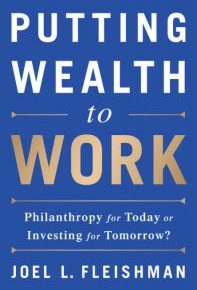
Disrupting defaults and upending moral hierarchies in discussions of philanthropic timeframes: A Review of Fleishman’s Putting Wealth to Work
New Works in the Field

Disrupting defaults and upending moral hierarchies in discussions of philanthropic timeframes: A Review of Fleishman’s Putting Wealth to Work

Editors’ Note: Benjamin Soskis reviews Joel Fleishman’s Putting Wealth to Work: Philanthropy for Today or Investing for Tomorrow? HistPhil recently published an excerpt from the book. In his new book, Putting Wealth to Work, Joel Fleishman, a professor of law and public policy at Duke and the director of its Center for Strategic Philanthropy and Civil … Continue reading →

Puncturing the Myth of Henry Ford II’s Foundation Resignation–an excerpt from Joel Fleishman’s Putting Wealth to Work
New Works in the Field

Puncturing the Myth of Henry Ford II’s Foundation Resignation–an excerpt from Joel Fleishman’s Putting Wealth to Work

Editors’ Note: The following is a modified excerpt from Joel Fleishman’s recently published book, Putting Wealth to Work: Philanthropy for Today or Investing for Tomorrow? Henry Ford II resigned as a trustee of the Ford Foundation in 1976, 40 years after he assumed his first role at the organization.  His decision to leave, and the way … Continue reading →

“We are the Outcome of Your Actions”: Philanthropy and the Discourse of the Beneficiary
New Works in the Field

“We are the Outcome of Your Actions”: Philanthropy and the Discourse of the Beneficiary

Editors’ Note: The following post is adapted from a talk that Bruce Robbins gave at the University of Copenhagen in June 2017. It is based on his recently published book, The Beneficiary. In the May 17, 2016 London Review of Books, journalist Ben Ehrenreich interviewed a 31-year-old Syrian man he encountered in the so-called “Jungle” … Continue reading →