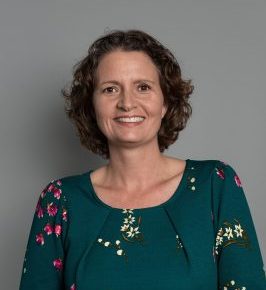
Editors’ Note: Bojana Radovanović continues HistPhil‘s forum on the Inclusive Study of Global Philanthropy. In academic discourse, philanthropy is most often identified with donating money and volunteering time to charitable organizations. However, I believe, such an understanding does not exhaust the concept of philanthropy and the variety of forms in which it appears. All over … Continue reading
Author Archives: HistPhil
Studying generosity “down under”: Taking the colonial context seriously
Editors’ Note: Cassandra Chapman and Sana Nakata continue HistPhil‘s forum on the Inclusive Study of Global Philanthropy. All dimensions of life in Australia and New Zealand have been shaped by the experience of British colonisation. “Down under” is a colloquial term born from colonial politics of geography. The British “motherland” has been the key reference … Continue reading
An inclusive study of global philanthropy: how can we overcome definitional, cultural and geographical boundaries?
Editors’ Note: Pamala Wiepking opens HistPhil‘s forum on promoting an inclusive study of global philanthropy. In the coming weeks, scholars from around the world will reflect on the study of voluntary giving in their countries of focus and on how those studies can be informed by, and inform, Western definitions and norms, without being tethered … Continue reading
How did GoFundMe become “the Giving Layer of the Internet”?
Editors’ Note: Matt Wade recounts the growth of GoFundMe as the world’s largest giving platform, as analyzed in his recent article in the Journal of Philanthropy and Marketing. Despite their enormous success in introducing millions of people to the extraordinary potential of peer-to-peer fundraising, GoFundMe has lately been having a difficult time. There is accumulating … Continue reading
Civil society by the numbers? Nonprofits, accountability, and the creative politics of quantitative discipline
Editors’ Note: Aaron Horvath introduces the argument behind his recent article in American Journal of Sociology, “Organizational Supererogation and the Transformation of Nonprofit Accountability.” In the late 1990s and early 2000s, the nonprofit sector experienced a crisis of accountability. News of fraud, overpaid executives, and other misdeeds fueled popular anxieties over whether nonprofits were misusing … Continue reading
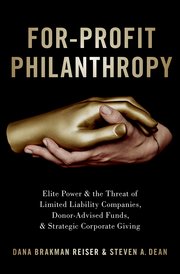
The Rise of Philanthropy LLCs and the Erosion of the Bargain of 1969
Editors’ Note: Dana Brakman Reiser and Steven Dean discuss the significance of the rise of philanthropy limited liability companies, and place it within historical context, based on material from their new book, For-Profit Philanthropy: Elite Power and the Threat of Limited Liability Companies, Donor-Advised Funds, and Strategic Corporate Giving (Oxford 2023). The history of U.S. … Continue reading
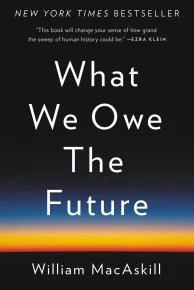
Antislavery in What We Owe the Future: The Contingency of Moral Change
Editors’ Note: Matthew Wyman-McCarthy examines the role of British abolitionism as a case study and model for the longtermism movement in William MacAskill’s What We Owe the Future (Basic Books, 2022). Throughout the eighteenth century, most Britons who bothered to reflect on the transatlantic slave trade at all would have considered it an unalterable fact … Continue reading
The Development of Charity in Early Jewish Thought
Editors’ Note: Gregg Gardner introduces his new book, Wealth, Poverty, and Charity in Jewish Antiquity (University of California Press, 2022), The ancient rabbis of the first centuries tell a story about a king, named “Munbaz.” Munbaz is loosely based on a historical figure – Monobazus II, the scion of a royal dynasty from Mesopotamia that … Continue reading
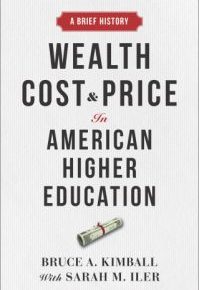
Stemming the Financial Rivalry that has Eroded Esteem for Higher Education
Editors’ Note: Bruce Kimball and Sarah Iler discuss the deleterious consequences of the financial rivalry among higher education institutions, as detailed in their new book Wealth, Cost, and Price in American Higher Education (Johns Hopkins University Press, 2023). A version of this post appeared in Inside Higher Education. Over the last four decades, public esteem … Continue reading
How Lloyd Morrisett Built Sesame Street, from the Foundation Up
Editors’ Note: Kathryn Ostrofsky offers a tribute to Lloyd Morrisett, the foundation leader who died on January 15, 2023, best known for his role in the creation of Sesame Street. Photo of Morrisett on the HistPhil header from Gil Vaknin / Sesame Workshop. Lloyd N. Morrisett, a psychologist who forged a career in philanthropic foundations, … Continue reading
Michael J. Gerson and the Duty of Philanthropy
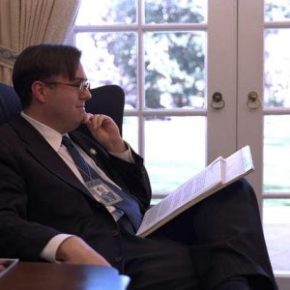
Editors’ Note: John DiIulio, Jr. reflects on the philanthropic vision of his friend and colleague Michael Gerson, who died on November 17, 2022. The photo of Gerson on the HistPhil header is courtesy of White House Photo. Michael J. Gerson, best known as a speechwriter for President George W. Bush and a critic of President … Continue reading
Where Have All the Funders Gone? How Big Philanthropy Left the Humanities Behind
Editors’ Note: Leonard Cassuto and Robert Weisbuch discuss the decline of U.S. philanthropic foundation support for the humanities in higher education, based on their book The New PhD: How to Build a Better Graduate Education (Johns Hopkins, 2021). And then there were none. As the millennium unfolded, humanists have watched as funders have deserted U.S. higher … Continue reading
The many meanings of ‘community’ and nonprofits’ place in urban policy
Editors’ Note: Jeremy Levine discusses the indeterminate meaning of ‘community’ and how it shapes nonprofit organization’s place in urban policy, a major theme of his 2021 book, Constructing Community: Urban Governance, Development, and Inequality in Boston (Princeton University Press). It is impossible to understand urban policy in the United States without appreciating the role of … Continue reading
A Masterpiece of Political Imagination: What Tocqueville Saw–and Didn’t See–in the United States
Editors’ Note: The following is an adaptation of a lecture delivered in May 2022 by Olivier Zunz at the University of Virginia’s Institute for Advanced Studies in Culture on his book, The Man Who Understood Democracy: The Life of Alexis de Tocqueville (Princeton University Press, 2022). When Alexis de Tocqueville, only 25 years-old in 1831, … Continue reading
Inequality and Organizational Vitality: A History of Nonprofit Neighborhoods and the American State
Editors’ Note: Claire Dunning introduces her new book, Nonprofit Neighborhoods: An Urban History of Inequality and the American State (University of Chicago, 2022). I first encountered the puzzle that inspired my recent book, Nonprofit Neighborhoods: An Urban History of Inequality and the American State, at a meeting I attended while working at The Boston Foundation … Continue reading
Corporate Philanthropy as Diversity Capital
Editors’ Note: Patricia A. Banks reflects on the significance of Black cultural patronage and diversity capital, key concepts in her new book, Black Culture, Inc.: How Ethnic Community Support Pays for Corporate America (Stanford University Press, 2022). In 2016, the National Museum of African American History and Culture (NMAAHC) opened its doors to the public. … Continue reading
The Tyranny of Generosity and How we Can Tame it
Editors’ Note: Ted Lechterman introduces his new book, The Tyranny of Generosity: Why Philanthropy Corrupts Our Politics and How We Can Fix It (Oxford University Press, 2021). When philosophers assess philanthropy, they tend to focus narrowly on the decisions of donors and the relationship between donors and recipients. Do individuals have a duty to give? … Continue reading
Building Prisms of the People within the Nonprofit Industrial Complex
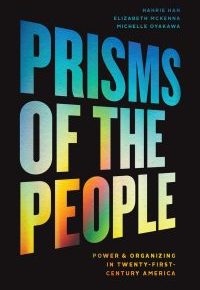
Editors’ Note: Michelle Oyakawa explores the lessons behind the case studies collected in Prisms of the People: Power & Organizing in Twenty-First-Century America (University of Chicago, 2021), co-written with Hahrie Han and Elizabeth McKenna. A prism is a powerful instrument that can gather, focus, and project light. My co-authors and I chose prisms as a … Continue reading
‘A sprawling, complicated chronicle’ of ACT UP New York: A review of Schulman’s Let the Record Show
Editors’ Note: Dan Royles reviews Sarah Schulman’s Let the Record Show: A Political History of Act Up New York, 1987-1993. This version of the review has been revised to reflect a response from Schulman. Sarah Schulman’s Let the Record Show: A Political History of ACT UP New York, 1987-1993 is a sprawling, complicated chronicle of … Continue reading
Hybrid entities on the Nonprofit-Government Continuum
Editors’ Note: Ellen Aprill introduces her research on governmental and semi-governmental federal charitable entities. A version of this post appeared on Notice & Comment, a blog from the Yale Journal on Regulation and ABA Section of Administrative Law & Regulatory Practice. Few American taxpayers know that they can make tax-deductible charitable contributions of cash and … Continue reading