Editors’ Note: Jamie Levine Daniel introduces her research, done with Fredrik O. Andersson, on expanding the definition of nonprofit organization founding, recently published in the Canadian Journal of Nonprofit and Social Economy Research. “When is a nonprofit founded?” This seems like a straightforward question. However, the answer is anything but straightforward, because founding is a … Continue reading
Author Archives: HistPhil
Remembering Marion Fremont-Smith
Editors’ Note: Jill Horwitz remembers Marion Fremont-Smith, one of the most important figures in the study of nonprofit law in the last half-century, who died on December 30, 2021. Marion Fremont-Smith died peacefully in her home of 60 years in Cambridge, Massachusetts on December 30th, 2021. She was 95. Marion’s contributions over her long career … Continue reading
Why Popularist Attacks on Progressive Philanthropy Miss the Mark
Editors’ Note: Over the last year, a number of center-left and centrist journalists and political operatives have advanced a critique of progressive philanthropy from a “popularist” perspective, arguing that progressive philanthropy has promoted causes without significant support from the American public that have proved injurious to the electoral prospects of the Democratic party. This critique … Continue reading
The many meanings of “women’s empowerment”: a history of the “women in development” movement
Editors’ Note: Joanne Meyerowitz examines the history of the “women in development” movement, based on material in her recent book, A War on Global Poverty: The Lost Promise of Redistribution and the Rise of Microcredit (Princeton University Press, 2021). Today “empowering women” is a ubiquitous buzz phrase in both the policy and philanthropy of global … Continue reading
Behind the Scenes of WHITE PHILANTHROPY
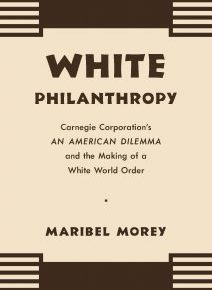
Editors’ Note: HistPhil co-editor Maribel Morey introduces her new book, White Philanthropy: Carnegie Corporation’s An American Dilemma and the Making of a White World Order (2021), and underscores the research methodology at the foundation of the book’s historical narrative. Earlier this month, my first book, White Philanthropy: Carnegie Corporation’s An American Dilemma and the Making … Continue reading
Epistemic Crises, Then and Now: The 1965 Carnegie Commission as Model Philanthropic Intervention
Editors’ Note: Peter Kaufman argues that the 1965 Carnegie Commission that led to the creation of the U.S.’s public television and radio systems can be a model for a philanthropic intervention to address our current epistemic crisis. With lies now so rampant on the Internet, television, and radio – with every printed page, moving image, … Continue reading
Bowling with Trump: The Downside of Social Capital
Editors’ Note: Alejandro Portes continues HistPhil’s forum on “uncivil civil society.” I have adapted the title of this comment from the classic article by Sheri Berman, “Civil Society and the Collapse of the Weimar Republic” published in 1997. Since that time, several additional studies have documented the close relationship between German associationism and the rise … Continue reading
MALDEF, the Ford Foundation and the Politics of Patronage
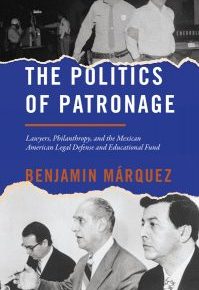
Editors’ Note: Benjamin Márquez introduces his new book, The Politics of Patronage: Lawyers, Philanthropy and the Mexican American Legal Defense and Educational Fund, 1967-2000 (University of Texas Press, 2021). The Mexican American Legal Defense and Educational Fund (MALDEF) is one of the best-known Latino/a political organizations. The scope of its involvement in Latino/a politics is … Continue reading
Lead Zeppelin? A Chance for a Revival of Germany’s Third Sector
Editors’ Note: Thomas Adam highlights an important recent court case in Germany that has the potential to transform the nation’s philanthropic sector. Over the course of the nineteenth century, German civil society experienced a remarkable expansion in the absolute numbers of, and in the assets given to, foundations and endowments. Wealthy Germans created endowments that … Continue reading
Frederick Douglass and the Political Theory of Dirty Money
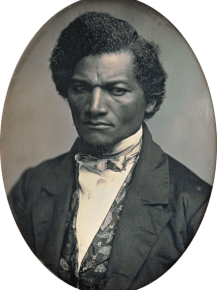
Editors’ Note: Emma Saunders-Hastings introduces her new article in American Political Science Review on Frederick Douglass and his political theory of ‘dirty money.’ In 1844, the newly-formed Free Church of Scotland sent a fundraising mission to the United States. It raised about £3,000, largely from southern Presbyterian donors. Abolitionists in the United States and abroad … Continue reading
Why Early American Fears about Civil Society Still Matter
Editors’ Note: Kevin Butterfield continues HistPhil’s forum on “uncivil civil society.” Historians and social scientists studying the civil society of the early United States have rediscovered fears and anxieties within the much-celebrated notion of Americans as a “nation of joiners.” The emerging world of mutual aid organizations, reform societies, political clubs, and voluntary associations of … Continue reading
MacKenzie Scott, the Giving Pledge, and Rival Discourses of Billionaire Philanthropy
Editors’ Note: Hans Peter Schmitz, George E. Mitchell, and Elena M. McCollim introduce their research on the Giving Pledge, and analyze how one of its most prominent signatories, MacKenzie Scott, poses a challenge to the discourse surrounding philanthropy it most often advances. During the Covid-19 pandemic, MacKenzie Scott accompanied three rounds of billion-dollar donations to … Continue reading
The Stakes of Americans For Prosperity Foundation v. Bonta
Editors’ Note: Legal scholars Sarah C. Haan and Faith Stevelman assess the significance and consequences of the recent Supreme Court ruling on nonprofit disclosure, Americans for Prosperity Foundation v. Bonta. On July 1st, in Americans for Prosperity Foundation v. Bonta (AFPF), a splintered Supreme Court majority invalidated California’s right, as a perquisite to in-state fundraising, … Continue reading
Introducing AMATEURS WITHOUT BORDERS
Editors’ Note: Allison Schnable introduces Amateurs without Borders: The Aspirations and Limits of Global Compassion (University of California Press, 2021). This is Schnable’s recently-published book examining the rise of new actors in the international development world: volunteer-driven grassroots international nongovernmental organizations. In 1968, the radical priest and social critic Ivan Illich addressed a conference of North … Continue reading
Uncivil disobedience in an uncivil society
Editors’ Note: Candice Delmas continues HistPhil‘s forum on “Uncivil Civil Society” with a defense of uncivil disobedience. There is a ‘crisis of civility’, we are told, an ‘epidemic of incivility.’ We must #ReviveCivility to preserve our fragile bonds in civil society. We need to break free of our online bubbles and learn to talk and … Continue reading
Thoughts on Uncivil Civil Society 2021: Imperiling, and Defending, Democracy in the United States
Editors’ Note: Nancy Rosenblum continues HistPhil’s forum on “Uncivil Civil Society.” ‘Civil society’: the phrase comes with built-in praise and promise. The crowded sphere of voluntary associations standing between public political life and private affairs is defined as sociable and civil. What civic education in public schools is for children, civil society is for promoting … Continue reading
Revisiting “Civil Society and the Collapse of the Weimar Republic”
Editors’ Note: Sheri Berman continues HistPhil’s forum on “Uncivil Civil Society,” revisiting her seminal article, “Civil Society and the Collapse of the Weimar Republic” in World Politics. In 1997 I published an article entitled “Civil Society and the Collapse of the Weimar Republic” that challenged a growing consensus on the part of academic and non-academic … Continue reading
What’s Civil about Civil Disobedience?
Editors’ Note: Erin Pineda continues HistPhil’s forum on ‘Uncivil Civil Society,’ examining the civil dimensions of civil disobedience and their relation to our conceptions of civil society. The details hardly need rehearsing: on the afternoon of January 6, 2021, hundreds of Trump supporters stormed the US Capitol building, mobilized by the belief that the recent … Continue reading
The Limits of the Bob Jones decision: why we shouldn’t rely on the IRS to police uncivil civil society
Editors’ Note: Lloyd Hitoshi Mayer continues HistPhil‘s forum on ‘Uncivil Civil Society,’ highlighting the challenges in turning to the contrary-to-fundamental-public-policy doctrine laid out in the 1983 Bob Jones University Supreme Court case as a means of policing uncivil civil society. In a recent article, Zachary B. Pohlman and I consider the application to churches of … Continue reading
Revisiting ‘Bad Civil Society’
Editors’ Note: Simone Chambers and Jeffrey S. Kopstein kick off HistPhil‘s online forum on “Uncivil Civil Society,” revisiting an important article they wrote on the topic two decades ago. The “Uncivil Civil Society” forum will examine challenges to the neo-Tocquevillian strain of thinking that poses strong links between civil society and civil, liberal, and democratic … Continue reading