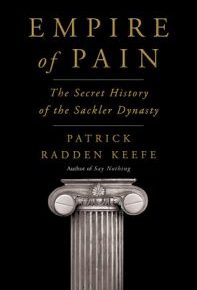
Editors’ Note: Benjamin Soskis reviews Patrick Radden Keefe’s Empire of Pain: The Secret History of the Sackler Dynasty. For a few weeks each summer for the last decade or so, one of my daughters has attended camp at the Smithsonian Institution. That meant that many July mornings and afternoons, when I was dropping off or … Continue reading
Author Archives: HistPhil
The Charitable Solicitation Context of Americans for Prosperity Foundation v. Beccerra
Editors’ note: Joseph Mead situates the pending Supreme Court case Americans for Prosperity Foundation v. Beccerra within the broader history of efforts to regulate charitable solicitation. The Supreme Court will soon decide a case with potentially significant implications for regulating nonprofits, Americans for Prosperity Foundation v. Beccerra. In the upcoming case, two nonprofits have challenged … Continue reading
Early Amnesty International and the Art of Foreign Relations
Editors’ Note: This post, from Swati Srivastava, is adapted from her article, “Navigating NGO-Government Relations in Human Rights: New Archival Evidence from Amnesty International, 1961-1986,” recently published in International Studies Quarterly. In 1961, when Amnesty International was founded, it entered a daunting international landscape for human rights. After World War II, the international community passed … Continue reading
The Biden Partnerships Plan is Faith-Based Initiative 5.0
Editors’ Note: Stanley Carlson-Thies provides historical background for President Biden’s recent (re-)establishment of the White House Office of Faith-Based and Neighborhood Partnerships. President Biden by Executive Order 14015 (Feb. 14, 2021) created a White House office to promote government partnerships with civil society organizations, both religious and secular, to maximize the effectiveness of services for … Continue reading
When Philanthropy is Uncivil
Editors’ Note: As the first contributor to an ongoing forum that HistPhil will be publishing over the next several months on the “uncivil” nature and histories of civil society, Chiara Cordelli illuminates the uncivil dimensions of philanthropy. Philanthropy, once again, has stepped in to meet unmet needs. The amount donated in response to the pandemic … Continue reading
US FOUNDATIONS AND THE RISE OF B-SCHOOLS IN THE 20TH CENTURY
Editors’ Note: Introducing a 2020 article he co-authored with Bill Cooke in Academy of Management Learning & Education, Arun Kumar argues that elite US “foundations’ involvement in establishing B-schools globally is closely linked to a broader mission to establish the USA’s geo-political place and power in the world.” US philanthropic foundations, especially the ‘Big Three’ … Continue reading
Follow the Tax Incentive: Thoughts on Berman’s The American Jewish Philanthropic Complex
Editors’ Note: Lily Geismer continues HistPhil‘s mini-book forum on Lila Corwin Berman‘s The American Jewish Philanthropic Complex. You can read Ben Ratskoff‘s earlier review of the book here. Along with Brent Cebul and Mason Williams, I recently co-edited a volume called Shaped by the State: Toward a New Political History of the Twentieth Century United … Continue reading
The Entanglements of Jewish Philanthropy and Liberal Statecraft: A Review of Berman’s The American Jewish Philanthropic Complex
Editors’ Note: Over the next few weeks, HistPhil will feature several reviews of Lila Corwin Berman’s recently published The American Jewish Philanthropic Complex (Princeton University Press, 2020). Ben Ratskoff offers the first of these below. Lily Geismer follows with a review here. The climax of Lila Corwin Berman’s new monograph is the infamous fall of … Continue reading
Acknowledging Multiple Histories: Perspectives on Philanthropic Foundations in Canada
Editors’ Note: Peter R. Elson and Sylvain A. Lefèvre, co-editors (with Jean-Marc Fontan) of the recently published Philanthropic Foundations in Canada: Landscapes, Indigenous Perspectives and Pathways to Change (PhiLab, 2020), introduce the themes of the new book. An examination of the history of philanthropy can take one of two paths: A celebration of growth and accomplishment, or … Continue reading
Mutual insurance: Its recent rise and very long history in the Netherlands
Editors’ Note: Examining the historical record on Dutch mutual insurance from the sixteenth century to the present, Marco H.D. van Leeuwen suggests learning from this history. While acknowledging that mutualism might not “regain the importance it once had,” van Leeuwen suggests “it might well occupy a more prominent place. Indeed, we might well need the … Continue reading
Civic Gifts: A History of Voluntarism and Giving as forms of Governance
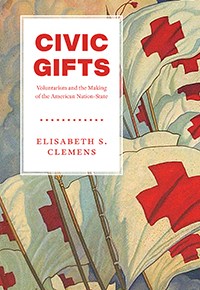
Editors’ Note: Elisabeth S. Clemens introduces themes from her new book, Civic Gifts: Voluntarism and the Making of the American Nation-State (University of Chicago Press, 2020). Portions of this essay are adapted from the book’s introduction. As with so many crises before, the first wave of the COVID pandemic produced a schizophrenic reaction to American … Continue reading
Waqf and the Management of Water Resources in the Middle East: the historical role of local communities
Editors’ Note: Closing HistPhil’s forum on waqfs, Sabrina Joseph argues that, by analyzing natural resource management in early modern Ottoman Syria, for example, “we gain precious insight not only into the role of local communities but also into those value systems and indigenous institutions, such as waqf, that can be harnessed by present day political … Continue reading
FLUID JURISDICTIONS (2020) and Solid Perpetuities
Editors’ Note: Continuing HistPhil‘s forum on waqfs, Leilah Vevaina reviews Nurfadzilah Yahaya’s Fluid Jurisdictions (2020), while discussing her own research on religious endowments in India and the Straits Settlements. Vevaina writes: “This axis of what colonial authorities recognized as public, and hence, as charitable giving, versus familial hence private giving, was the key evaluator of why … Continue reading
Has Volunteering Changed in the United States? Trends, Styles, and Motivations in Historical Perspective
Editors’ Note: Susan M. Chambré introduces her article, published in Social Service Review this June 2020, “Has Volunteering Changed in the United States? Trends, Styles, and Motivations in Historical Perspective.” Pushing back against leading scholarship on volunteering in the U.S. noting the advent of a “new volunteer workforce that is supposedly devoting smaller blocks of … Continue reading
The Unintended Effects of Waqf Litigation: A Review of FLUID JURISDICTIONS (2020)
Editors’ Note: Continuing HistPhil‘s forum on waqfs, Nada Moumtaz relates Nurfadzilah Yahaya’s Fluid Jurisdictions (2020) with her own research of waqf litigation in twentieth century Beirut, Lebanon. Moumtaz argues: “Beyond Yahaya’s explanation of waqf litigation among the Arab diaspora in nineteenth century Southeast Asia, I want to suggest—based on my own research of twentieth century … Continue reading
Surplus and Colonial Charity
Editors’ Note: Launching HistPhil’s forum on waqfs, Nurfadzilah Yahaya introduces her new book, Fluid Jurisdictions: Colonial Law and Arabs in Southeast Asia (Cornell University Press, 2020) In this presentation of Fluid Jurisdictions, Yahaya notes that: “While scholarship on the history of human generosity is haunted by discussions of altruistic ends and self-regarding motives, the specific … Continue reading
Introducing HistPhil’s Forum on Waqfs
Editors’ Note: This post, by HistPhil co-editor Maribel Morey, introduces HistPhil’s forum on waqfs, which will be featured on this site for the next weeks. If Andrew Carnegie invented modern philanthropy, Bill Gates has become its global evangelist. For many HistPhil readers, including myself at times, this statement might not seem to be controversial. After … Continue reading
The Good Neighbor in a Time of Crisis
Editors’ Note: Nancy Rosenblum reflects on the meaning of the “good neighbor” during the coronavirus crisis, expanding upon her 2016 book, Good Neighbors: The Democracy of Everyday Life in America. This essay is adapted from the forthcoming essay, “The Democracy of Everyday Life in Disaster: Holding Our Lives in Their Hands,” in Democratic Theory (2020). … Continue reading
Charitable Action in Times of Crisis: What the state of Giving in the Aftermaths of 9/11 and Hurricane Katrina Can Tell Us About the post-COVID era
Editors’ Note: Nathan Dietz summarizes the findings of a new research brief from the Do Good Institute, “Community in Crisis: A Look at How U.S. Charitable Actions and Civic Engagement Change in Times of Crises,” and reflects on what it might suggest about giving, volunteering, and civic engagement in the post-COVID era. How has the … Continue reading
Movement Capture and the Long Arc of the Black Freedom Struggle
Editors’ Note: Responding to Ford Foundation President Darren Walker’s statement on Juneteenth that these are “[un]precedented times– and hopefully a sign of the change that’s to come,” Erica Kohl-Arenas and Megan Ming Francis ask which roles Walker and other philanthropic leaders intend or want to play in the context of the movement for Black lives; … Continue reading